

Everything You Need to Know About Getting Married in Yosemite National Park
Yosemite is the place where granite meets sky and the scale of everything makes you feel wonderfully small. Half Dome rising 4,737 feet above the valley floor. El Capitan, the largest granite monolith in the world, standing like a sentinel at the valley entrance. Waterfalls that plunge thousands of feet into mist filled canyons. Ancient sequoias so massive that standing next to one fundamentally changes your understanding of time.
Eloping in Yosemite means saying your vows in one of the most awe inspiring places on the planet. Not in a building designed to look impressive, but in a landscape that is genuinely, overwhelmingly magnificent. I have photographed elopements across the world, and Yosemite remains one of the places that makes every couple pause, look around, and realize that this moment, in this place, is something they will carry for the rest of their lives.
Permits: The Most Important Step
Yosemite is a National Park, and the National Park Service requires a Special Use Permit for all weddings and commitment ceremonies. This is non negotiable. If you have a ceremony in Yosemite without a permit, you risk fines and having your ceremony interrupted by a ranger.
Key details:
- Permit cost: $150 (as of 2026)
- Apply through the Yosemite Special Park Uses office
- Submit your application at least 2 weeks before your ceremony, though 2 to 3 months is recommended for peak season
- Maximum group size: generally 12 people, though this can vary by location
- Ceremony duration: 1 hour maximum at any single location
- No chairs, arches, decorations, or structures of any kind are allowed
- No amplified music or sound systems
- You must stay on established trails and paved areas at your permitted location
- Clean up: leave absolutely no trace
What this means practically: Your Yosemite elopement will be natural, simple, and focused entirely on the two of you and the landscape. No elaborate setups. No decorations competing with the scenery. Just you, your person, and one of the most beautiful places on Earth. Many couples tell me afterward that the restrictions actually made their ceremony more meaningful because there was nothing to distract from the moment.
Your photographer needs a Commercial Use Authorization (CUA) to shoot in the park. This is separate from your ceremony permit. Make sure your photographer has current authorization before booking. I maintain mine year round.
Best Elopement Locations in Yosemite
Glacier Point
The view from Glacier Point is the most famous panorama in Yosemite. From 3,214 feet above the valley floor, you look directly at Half Dome, Vernal Fall, Nevada Fall, and the entire eastern end of the valley. At sunrise, the light hits Half Dome and turns it orange and pink. At sunset, the whole valley glows.
Glacier Point is accessible by car from late May through October/November (the road closes for winter). The parking area fills up by mid morning in summer, so arrive early. For elopements, sunrise is ideal: smaller crowds and the most dramatic light. The overlook itself is paved and accessible.
Taft Point
If Glacier Point is the classic Yosemite view, Taft Point is the adventurous one. A moderate 2.2 mile round trip hike from the Sentinel Dome/Taft Point trailhead brings you to a rocky overlook with a sheer 3,000 foot drop to the valley floor. There is a railing at the main viewpoint but the surrounding area has open cliff edges. The view of El Capitan from Taft Point is jaw dropping.
Taft Point is less crowded than Glacier Point and feels more remote despite being a relatively easy hike. For couples who want the drama of a cliff edge ceremony with genuine elevation, this is the spot. The trail is accessible from the same Glacier Point Road (seasonal access).
Sentinel Beach and Swinging Bridge
Inside Yosemite Valley, the Merced River creates sandy beaches and calm stretches of water that reflect the surrounding cliffs. Sentinel Beach, near the Swinging Bridge picnic area, gives you views of Yosemite Falls with the river in the foreground. The Swinging Bridge itself is a simple footbridge that provides a centered view of both Yosemite Falls and the valley walls.
These valley floor locations are accessible year round and work well for couples who want the Yosemite experience without a hike. The trade off is proximity to other visitors, especially in summer. Spring is spectacular here when the river runs high and the waterfalls are at peak flow.
Cathedral Beach
A quieter river beach in the western end of the valley with views of Cathedral Rocks and El Capitan. Cathedral Beach sees fewer visitors than Sentinel Beach and has a more intimate feel. The river bank provides natural ceremony backdrops with granite walls rising on both sides. This is one of the more popular permitted ceremony sites and for good reason: it delivers iconic Yosemite scenery with relative privacy.
Tunnel View
The single most photographed view in Yosemite. From the Tunnel View overlook (just past the Wawona Tunnel on Highway 41), you see El Capitan on the left, Bridalveil Fall on the right, Half Dome centered in the distance, and the entire Yosemite Valley stretching before you. It is the view that made Ansel Adams famous.
Tunnel View is always busy. For elopements, it works best as a portrait stop rather than a ceremony location. Swing by early in the morning or during golden hour when the light is best and the crowds are thinner.
Mariposa Grove
The largest grove of giant sequoias in Yosemite. Walking among trees that are 2,000+ years old puts your wedding day in a context that nothing else can. The Grizzly Giant, at approximately 2,700 years old, has a base circumference of over 96 feet. Standing at its base for your ceremony is humbling in the most beautiful way.
Mariposa Grove requires a shuttle bus from the parking area (about 2 miles). The grove trails are well maintained and partially accessible. This is an excellent option for couples who want a forest ceremony rather than a valley or cliff ceremony.
Best Time of Year
April through June: Waterfall season. Yosemite Falls, Bridalveil Fall, and the other waterfalls are at their most powerful from snowmelt. The valley is green, wildflowers bloom in the meadows, and the energy of the park is alive. This is peak season, so expect crowds and book permits early. Glacier Point Road typically opens in late May.
July through September: Warm, dry, and the most accessible. All roads and trails are open. Waterfalls slow to a trickle by late summer (Yosemite Falls often dries up completely by August). The landscape turns golden. Long days mean extended golden hour sessions. Crowds are at their peak in July and August but thin in September.
October through November: Fall color in Yosemite Valley is underrated. The oaks and maples turn gold and orange against the grey granite walls. Crowds drop significantly. Glacier Point Road usually closes in November. The weather is cooler but clear days are common.
December through March: Winter transforms Yosemite. Snow on the valley floor, frozen waterfalls, and a quiet that the park never has in other seasons. Glacier Point Road and Tioga Road are closed, limiting access to the valley floor and Mariposa Grove. But winter Yosemite is profoundly beautiful. The crowds are gone. The granite walls framed by snow and bare trees create images that feel timeless.
What It Costs
Park entrance: $35 per vehicle (valid for 7 days).
Ceremony permit: $150.
Photographer: $3,000 to $7,000+ depending on coverage hours.
Officiant: $200 to $600.
Lodging inside the park: The Ahwahnee Hotel (now the Majestic Yosemite Hotel) starts at $400+ per night and books far in advance. Yosemite Valley Lodge runs $250 to $350. Curry Village tent cabins start around $150. Half Dome Village hard sided cabins are $200 to $300. Housekeeping Camp is the budget option at around $100 per night.
Lodging outside the park: Mariposa and El Portal offer lodging from $100 to $250 per night. El Portal puts you 15 minutes from the valley. Mariposa is about 45 minutes.
Total realistic budget: $5,000 to $15,000 for two people including a 2 to 3 day trip with photography.
Frequently Asked Questions
Can we have flowers or a bouquet?
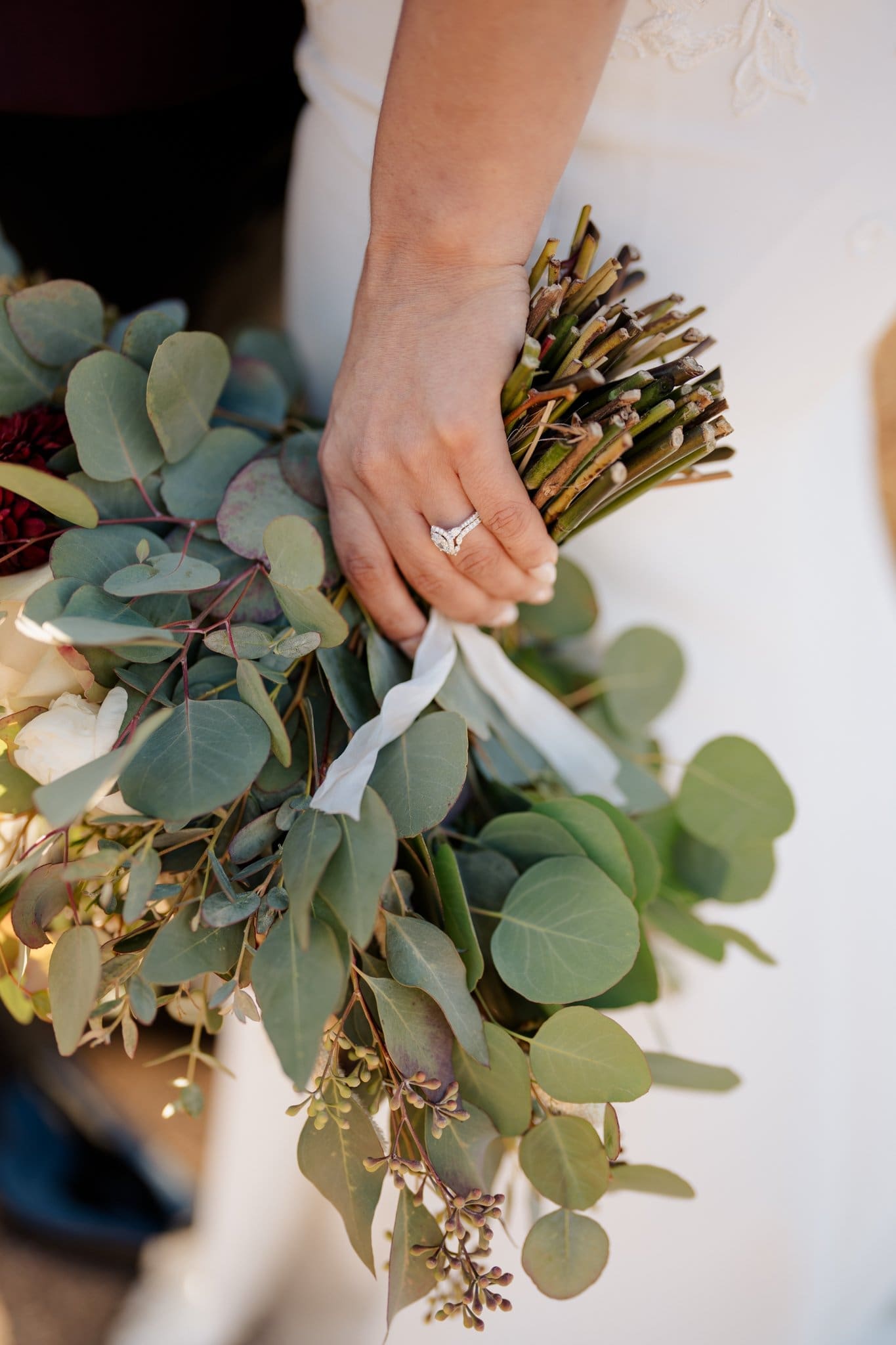
Yes. You can carry a bouquet and boutonniere. What you cannot do is set up arrangements, scatter petals, or leave any floral material behind. Everything you bring in must leave with you. Some couples use locally sourced wildflowers (without picking them from the park, as that is prohibited) or bring a simple bouquet that they carry throughout the day.
What about confetti, rice, or bubbles?
No. Nothing can be thrown, scattered, or released in the park. No confetti, rice, birdseed, bubbles, or balloon releases. Leave no trace means literally nothing stays behind.
Can we bring our dog?
Dogs are allowed in Yosemite but restricted to paved roads, bicycle paths, and the valley floor. They are not allowed on unpaved trails, in buildings, or on shuttle buses. For your ceremony, dogs can be present at valley floor locations (Cathedral Beach, Sentinel Beach) but not at Glacier Point, Taft Point, or Mariposa Grove. Dogs must be on a leash at all times.
What if there are park entry reservation requirements?
Yosemite has implemented peak season reservation systems in recent years. These requirements change annually, so check the NPS website for current rules when planning your date. Your ceremony permit does not exempt you from entry reservation requirements. Plan ahead.
How crowded will it be?
Yosemite sees over 4 million visitors per year, and the valley floor can feel very busy in summer. Early mornings (before 8 AM) and weekdays are significantly quieter. Locations outside the valley (Glacier Point, Taft Point, Mariposa Grove) are less crowded than valley floor spots. Your photographer should know timing strategies to minimize background tourists in your images.
What should I wear for a hike in elopement?
Comfortable shoes or hiking boots for the trail portions. Many brides hike in boots and change to other shoes for the ceremony. Grooms in dress shoes can handle most valley floor locations but will want something sturdier for Taft Point or other trail locations. Consider the weather and dress in layers. Yosemite valley can be 90°F in summer and 30°F in winter.
Plan Your Yosemite Elopement
Yosemite is not just a backdrop. It is a participant in your ceremony. The scale of the granite walls, the sound of the waterfalls, the light filtering through the sequoias. These are not decorations. They are the real thing. If you want your wedding day to feel vast, wild, and deeply connected to something bigger than yourselves, Yosemite is where you should be.








Read the Comments +